Music Distribution in 2026 - How It Works, What It Costs and How to Release Your Music on Spotify, Apple Music and Other Platforms


From CDs to Streaming - How Music Distribution Has Changed
A little over a decade ago, releasing an album meant pressing CDs, working with a physical distributor and fighting for space on store shelves. Today the picture looks completely different. Most listeners discover new music on streaming services such as Spotify, Apple Music, YouTube Music and Deezer, while social media - TikTok, Instagram and YouTube Shorts - increasingly decide which track goes viral.
For independent artists this means enormous opportunities, but also new challenges. Good music alone is not enough. For your track to reach streaming platforms, be correctly assigned to your profile, generate royalties and stand a chance of reaching new listeners, you need properly planned digital distribution.
If you are just starting out with releasing music, you may be wondering:
- How do I add music to Spotify?
- Can I upload a track myself?
- Why do I actually need a distributor?
- How much does music distribution cost?
- How long does it take to publish a single?
- Do I still keep the rights to my music?
In this guide we answer all of these questions. You will learn how modern music distribution works, how the available models differ, how to choose the right distributor and what to watch out for so that your release is professionally prepared from the start.
Whether you are releasing your first single, your next album, or representing a small label - you will find practical tips here that will help you avoid the most common mistakes and plan your release with confidence.
What exactly is music distribution?
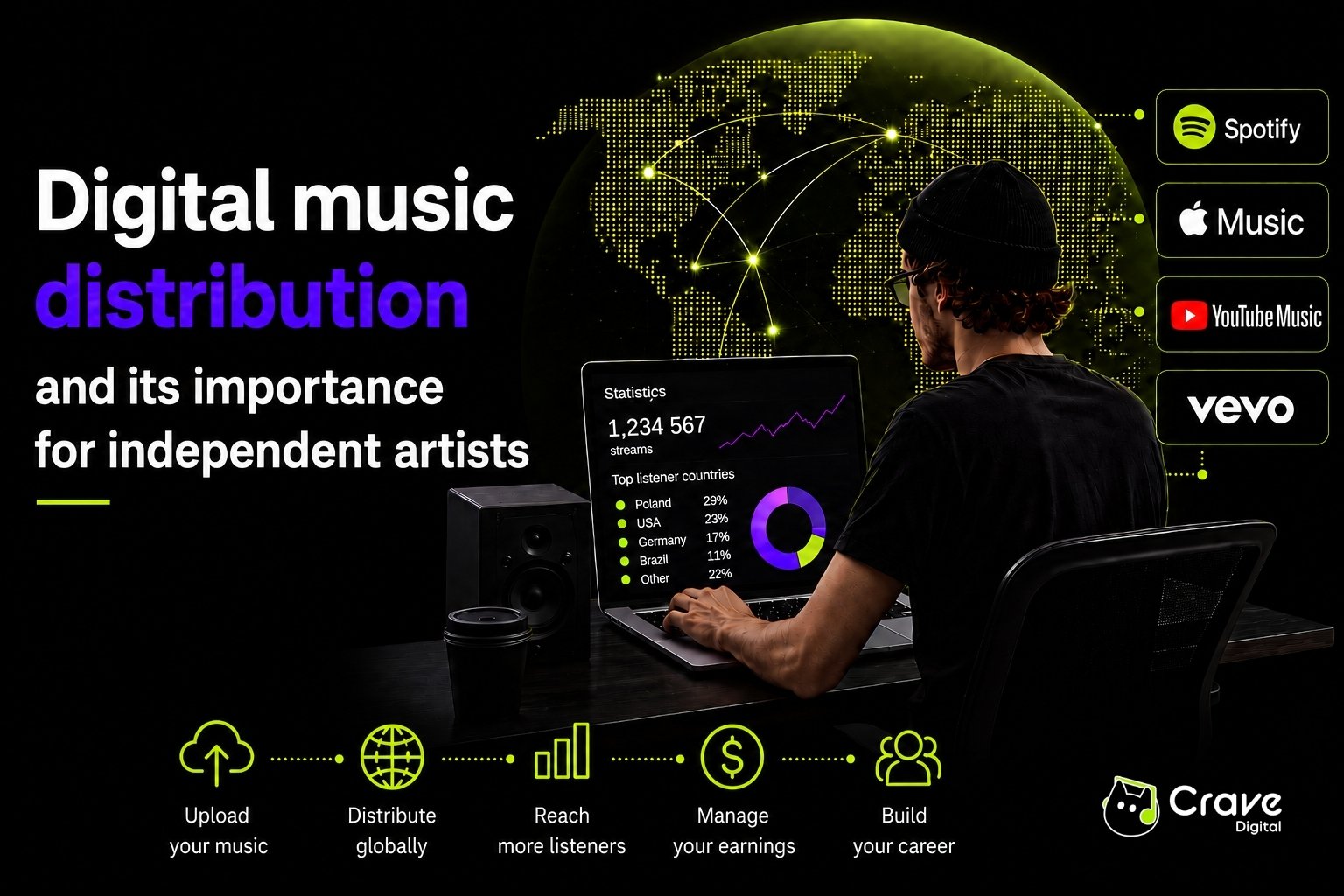
Put simply, music distribution is the process of delivering your recordings to streaming platforms and digital stores. It is what allows your track to appear on, among others:
- Spotify,
- Apple Music,
- YouTube Music,
- Amazon Music,
- Deezer,
- TIDAL,
- TikTok,
- Instagram,
- Shazam,
- and dozens of other services available worldwide.
Although it looks very simple from the listener's perspective - they type in an artist's name and press "Play" - behind the scenes there is an extensive system responsible for delivering audio files, managing metadata, copyright and royalty accounting. That is precisely what a digital distributor does.
Why can't you upload music to Spotify yourself?
This is one of the most frequently asked questions among beginner artists. The answer is simple. Spotify, Apple Music and Amazon Music do not allow most creators to upload music directly to their catalogues. The platforms work with certified distributors, who are responsible for:
- the accuracy of submitted data,
- file compliance with technical requirements,
- rights management,
- catalogue security,
- royalty accounting.
You could say that the distributor acts as a trusted intermediary between the artist and the streaming platforms. Without one, most services simply will not accept your release.
How does music distribution work step by step?
Although the whole process seems complicated, in practice it can be broken down into a few simple stages.
1. Preparing your materials
First you need to prepare all the elements of your release. Most often these will be:
- an audio file of appropriate quality,
- cover art compliant with platform requirements,
- track titles,
- names of the songwriters,
- performer information,
- release date,
- music genre,
- ISRC code.
This information is what we call metadata. Its accuracy has a huge impact on how your music is later searched for and how royalties are accounted for.
2. Adding the release to the distributor's dashboard
After logging in to the distribution dashboard, you upload your audio files, cover art and metadata, choose the platforms and set the release date. At this stage you can also decide whether the track should go to all platforms or only to selected services.
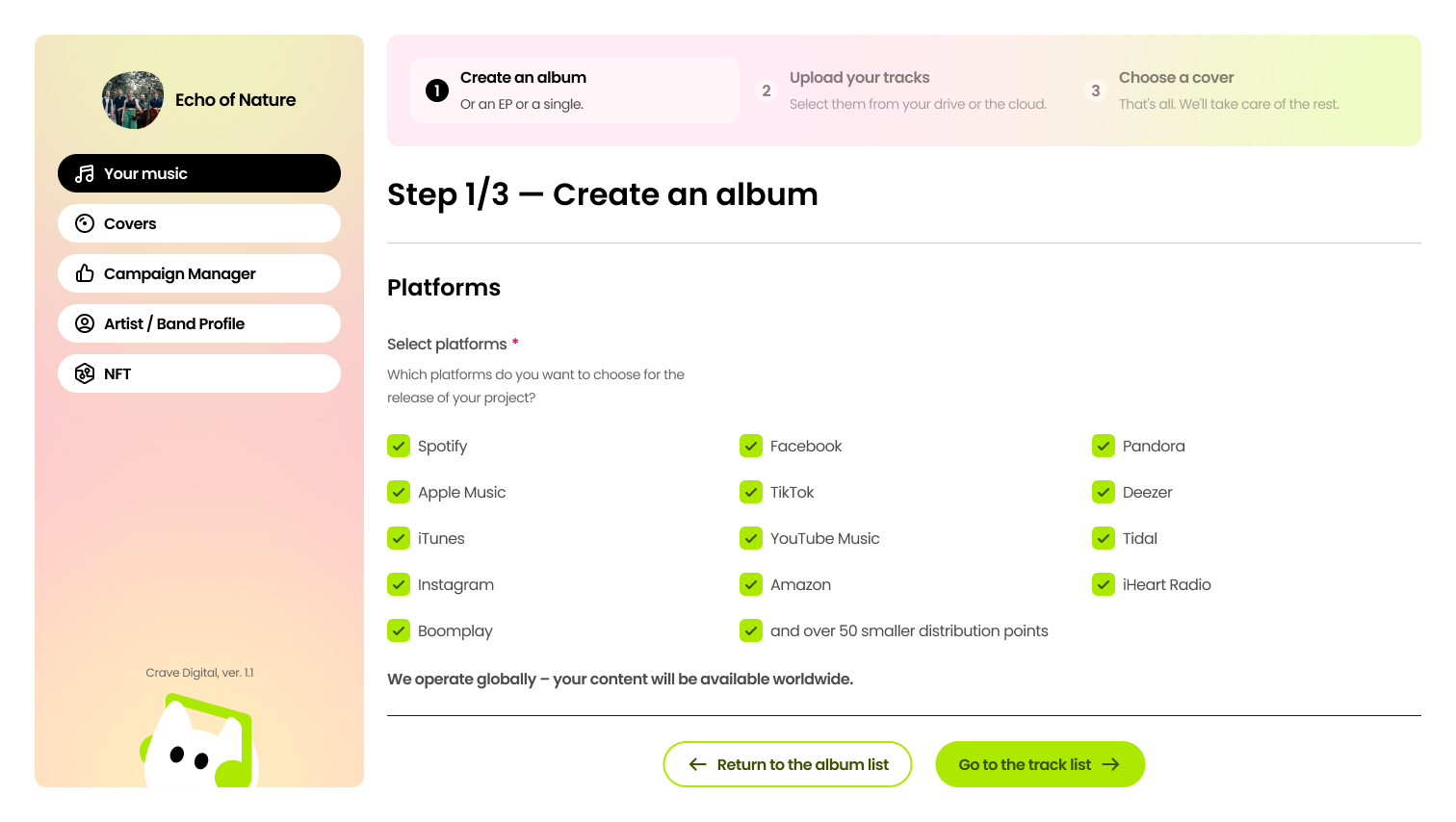
Platforms and release date - keep track of every publication status
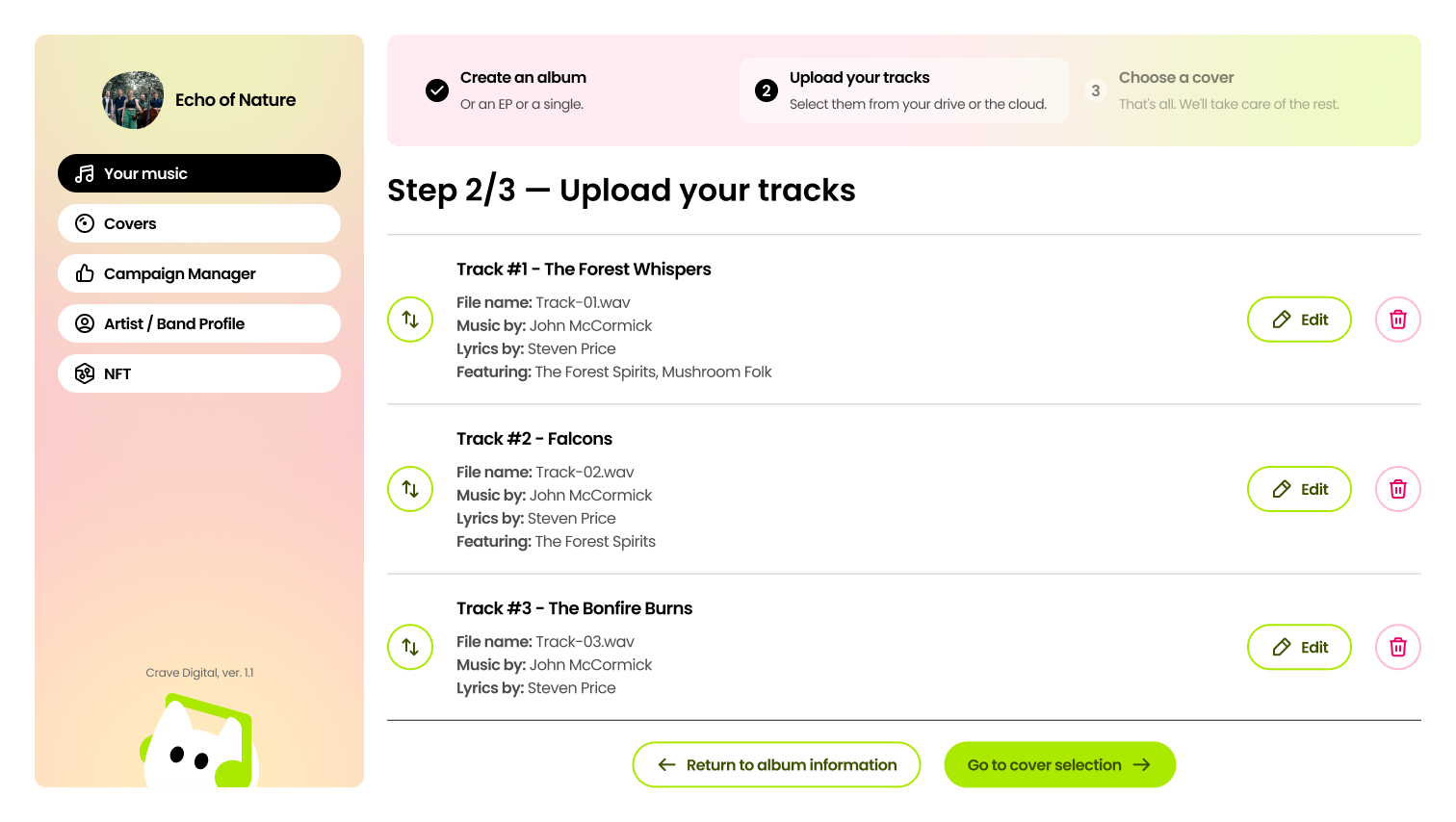
Uploading your audio file - audio, cover art and metadata in one place.
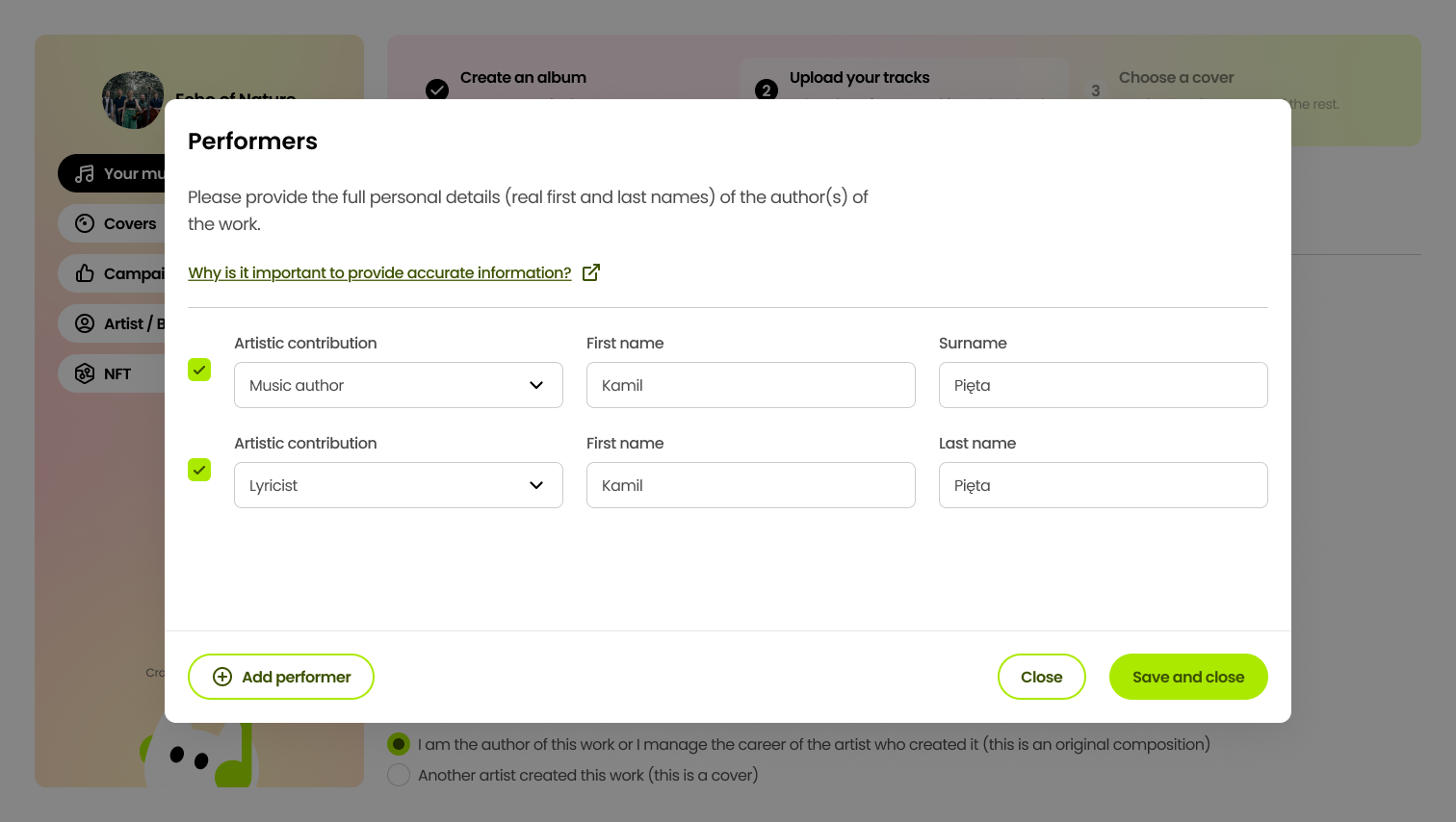
Release metadata - authors, performers, contributors
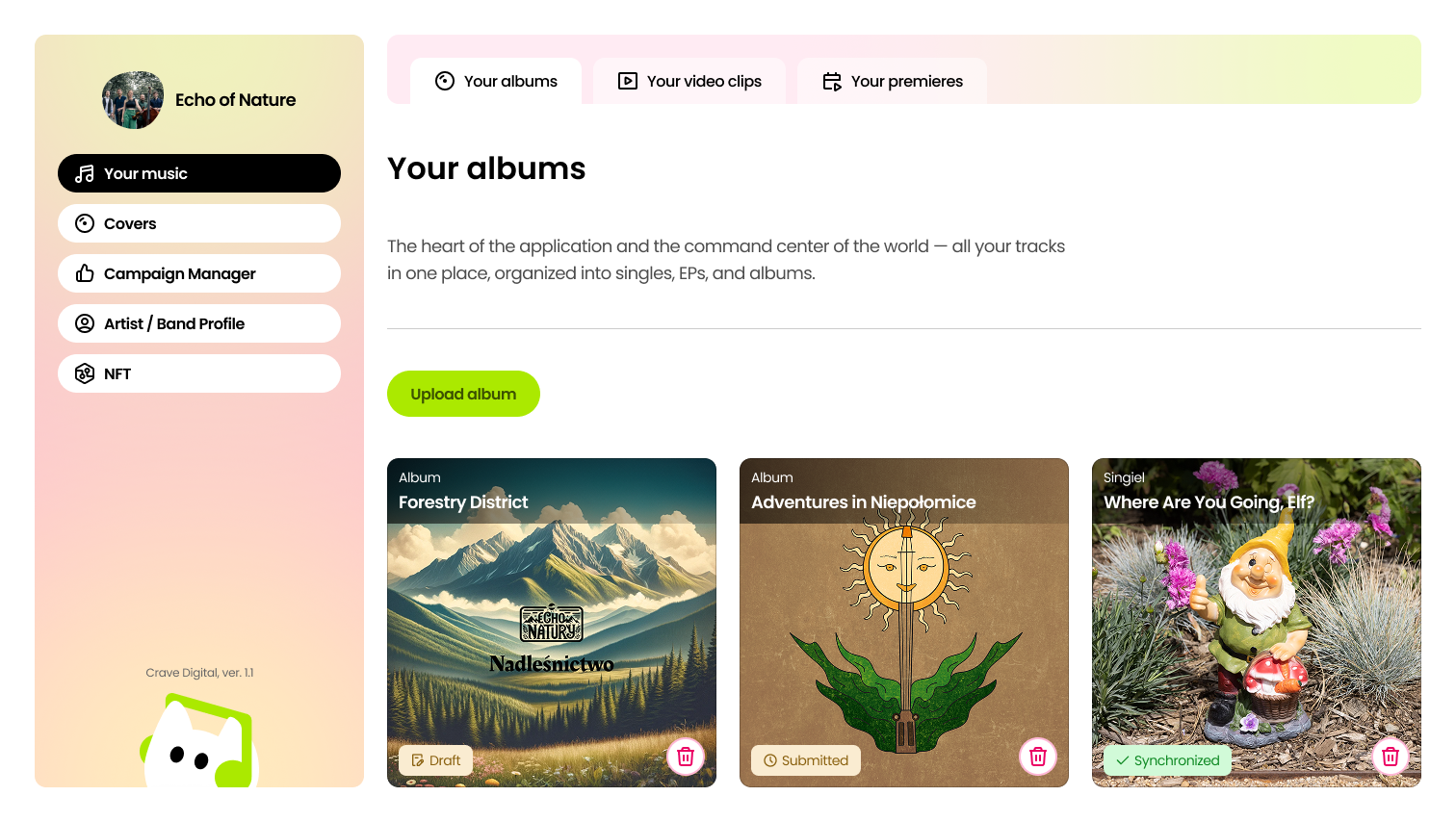
Crave Digital dashboard - an overview of your releases
3. Review
Before your music is sent onwards, the distributor checks:
- the accuracy of the metadata,
- cover art quality,
- compliance with DSP guidelines,
- copyright,
- potential infringements.
In recent years, automated checks for streaming fraud and the use of AI-generated content have been added. Today this is one of the crucial stages - we will return to it in the section on the realities of 2026.
4. Delivery to platforms
After a successful review, the release is sent to the selected streaming platforms. Each of them processes materials at its own pace. That is why individual services may publish a track at different times, and sometimes with a slight delay.
5. Release day
On release day the track appears on the platforms. From that moment listeners can play the music, add it to playlists, share it with friends and create reels and videos using the track.
6. Royalty accounting
Platforms report the number of streams and then transfer the amounts due to the distributor, who settles them with the artist according to the terms of the agreement. This process happens cyclically - the first reports usually appear with a delay of around 1-2 months from the end of a given accounting period.
What exactly does a music distributor do?
Many beginner artists believe that a distributor merely sends files to Spotify. A few years ago that was partly true. Today its role looks completely different. A good distributor is a technology and administrative partner responsible for far more than publishing music.
Delivers music to platforms
A single release can reach dozens of services worldwide at the same time. The artist does not have to contact each of them separately.
Manages metadata
Correct data determines whether your music appears under the right profile, whether royalties reach the right people, and whether the track can be found in search. Even a small error can cause problems identifying the release.
Handles royalty accounting
The distributor receives reports from streaming platforms, calculates the amounts due and makes them available to the artist. Depending on the cooperation model, it may take a commission, work on a subscription basis or offer additional accounting services. At Crave Digital the artist keeps 100% of the royalties generated from streams and sales on all platforms.
Helps protect your rights
A growing number of fraud attempts and AI-generated content means that copyright verification has become one of the key elements of modern distribution. A professional distributor helps reduce the risk of errors and publication problems.
Offers promotional tools
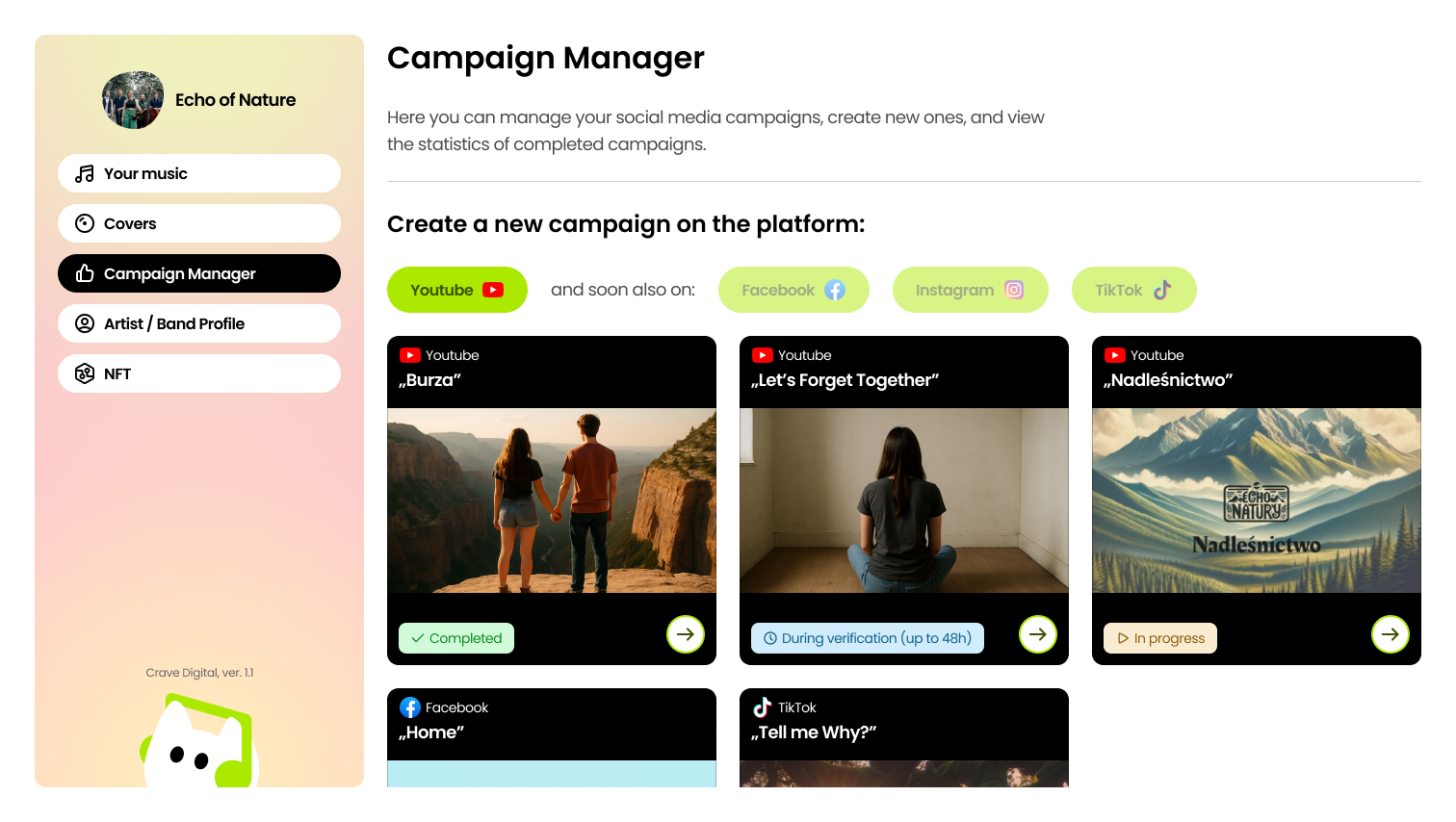
The best distributors also provide solutions that support promotion, such as smart links, playlist pitching, analytics, ad campaigns, AI tools for creating promotional materials and technical support. At Crave Digital artists have access to automated marketing campaigns and the AI Creator, which lets you quickly prepare covers, clips and promotional materials adapted to different media.
Types of music distribution
There is no single universal distribution model. Which solution works best depends on the stage of your career, your goals, and how much control you want to keep over your music. Today you will most often encounter three models.
1. Independent distribution (self-distribution)
This is currently the most popular solution among independent artists. You manage your own releases through a distribution platform, retaining full control over your music. In practice this means that:
- you choose the release date yourself,
- you decide which platforms your music appears on,
- you keep the rights to your recordings,
- you plan your promotional activities yourself.
The distributor handles the technical side of the process - delivering music to platforms, managing metadata and handling royalty accounting. This solution works well both for debut artists and for experienced musicians who want to retain full independence. This is also the model Crave Digital operates in.
2. Distribution through a label
If you work with a label, it usually takes over the entire distribution process. Depending on the agreement, it may also be responsible for marketing, promotion, playlist pitching, financing recordings and career development.
In return, the artist typically shares revenue and transfers part of the rights to the recordings (under a standard major-label deal, an artist usually receives 15-25% of streaming royalties after the label's share is deducted). For many beginner musicians this can be an attractive option, but it is worth analysing the terms carefully before signing.
3. Hybrid model (label services)
This solution has been gaining popularity in recent years. The artist remains the owner of their music but uses additional services offered by the distributor. These may include professional playlist pitching, ad campaigns, analytics, marketing consulting, publishing support and international promotion.
It is a good choice for artists who want to develop their career professionally but do not plan to sign a classic label contract.
The realities of 2026: what has changed in distribution
Before we move on to choosing a distributor, it is worth pausing on four changes that have significantly reshaped the market in recent years. Without knowing them, it is easy to make costly mistakes.
The royalty threshold on Spotify
Since April 2024 a rule has been in force that did not exist before: a track must reach at least 1,000 streams within 12 months before it starts generating royalties on Spotify at all. On top of that there is an undisclosed minimum threshold of unique listeners, aimed at artificial streaming. For beginner artists this means that early, low stream counts may not yet bring in revenue - and the strategy of "upload hundreds of short tracks and count on small payouts" has stopped working.
The flood of AI-generated music
The scale is enormous. In early 2026 Deezer reported that it receives around 60,000 fully AI-generated tracks per day - close to 39% of all delivered recordings. As much as 85% of streams of such content was detected as fraud and removed from the royalty pool. This is why platforms and distributors are tightening control over what enters their catalogues.
Fraud detection and rights verification
Detecting streaming fraud and unauthorised content has become part of distribution itself. Deezer launched its own AI detection technology and began licensing it to other platforms, while services such as TikTok have deployed multi-layered systems for detecting tracks altered by, for example, changing tempo or pitch. For an honest artist this is good news - the less fraud in the pool, the fairer the royalty split.
The reversed path of music discovery
It used to be: radio first, then streaming. Today fans first come across a fragment of a track in a short video (TikTok, Instagram Reels, YouTube Shorts), and only then look for it on Spotify or Apple Music. For distribution this leads to a concrete conclusion: a presence on social platforms and a well-prepared "moment" in the track are now often more important for a launch than classic pitching.
How to choose a music distributor?
This is one of the most important decisions you will make before releasing your music. Although most distributors offer access to similar streaming platforms, they differ in cost, range of services and quality of support. It is not worth choosing on price alone - what matters far more is whether a given distributor will still suit your needs in a year or two.
1. The payment model
First, check how the distributor charges. You will most often encounter three models: an annual subscription, a commission on royalties, or a combination of both. Consider which model will be more favourable given your release strategy.
2. How much of your royalties do you keep?
Not every distributor works the same way. Some take several dozen percent of revenue. Others, like Crave Digital, leave the artist 100% of royalties and charge only a subscription fee. This is one of the most important points of any agreement.
3. Which platforms will your music reach?
Spotify is only the beginning. Check whether the distributor also works with Apple Music, YouTube Music, TikTok, Instagram, Amazon Music, Deezer, TIDAL, Shazam and other local services. The wider the distribution network, the greater the potential reach of your music.
4. What does support look like?
Technical problems happen to everyone. That is why it is worth checking whether you can count on help in your own language, how quickly support responds and whether it is possible to reach a real person. Good support often turns out to be more important than a small difference in price.
5. What additional tools does the distributor offer?
Modern distribution is far more than publishing music. Increasingly, distributors offer smart links, playlist pitching, analytics, Content ID, music video distribution, VEVO, AI tools and ad campaigns. If you are planning a long-term career, these are exactly the elements worth paying attention to.
How much does music distribution cost?
This is one of the most frequently asked questions among beginner artists. There is no single answer - the price depends on the cooperation model and the range of services. The most common solutions are:
- Annual subscription. You pay a fixed fee and can publish music according to the terms of your chosen plan. This is particularly beneficial for artists who release regularly.
- Commission on royalties. You do not pay up front, but the distributor takes a set percentage of your revenue. It may seem attractive at first, but with a higher number of streams it often turns out to be less profitable.
- Premium services. Some distributors additionally offer paid services such as promotion, pitching, mastering, creating promotional materials or ad campaigns.
The biggest mistake many artists make is ending promotion on release day. In fact, that is exactly when it is worth increasing your activity.
Pre-release checklist
Before you click "Publish", make sure everything is ready.
The most common mistakes when releasing music
Even a great track can lose its potential through organisational mistakes. The most common problems are:
- sending the release too late,
- incorrect metadata,
- poorly prepared cover art,
- publishing under the wrong artist profile,
- no promotional activity,
- ending promotion on release day,
- ignoring analytics data,
- choosing a distributor on price alone.
Each of these mistakes is easy to eliminate if you plan the whole release process early enough.
Frequently asked questions
Summary
Music distribution has come a long way from physical formats to a digital infrastructure that combines delivering tracks, managing rights, accounting and promotion. In 2026 new realities are added to this: the royalty threshold on Spotify, the flood of AI-generated content, advanced fraud detection and the reversed path of music discovery.
For an artist - regardless of career stage - understanding these mechanisms is not a curiosity but a condition for consciously managing your presence on the market. A good distributor does not just send files; it helps you navigate this increasingly demanding environment.
Want to start distributing your music?
With Crave Digital you can release your music to global streaming services, keep 100% of your royalties and use promotional tools - from smart links, through automated campaigns, to the AI Creator. It is a solid foundation for a well-planned release.