
Digital Music Distribution and Its Significance for Independent Artists
Today, music is literally at your fingertips - a few clicks are all it takes to discover new sounds from the other side of the world. But the digital revolution changed more than just the way we listen. Above all, it redefined how music is created, how it reaches audiences, and who has a real chance of breaking through in the industry.
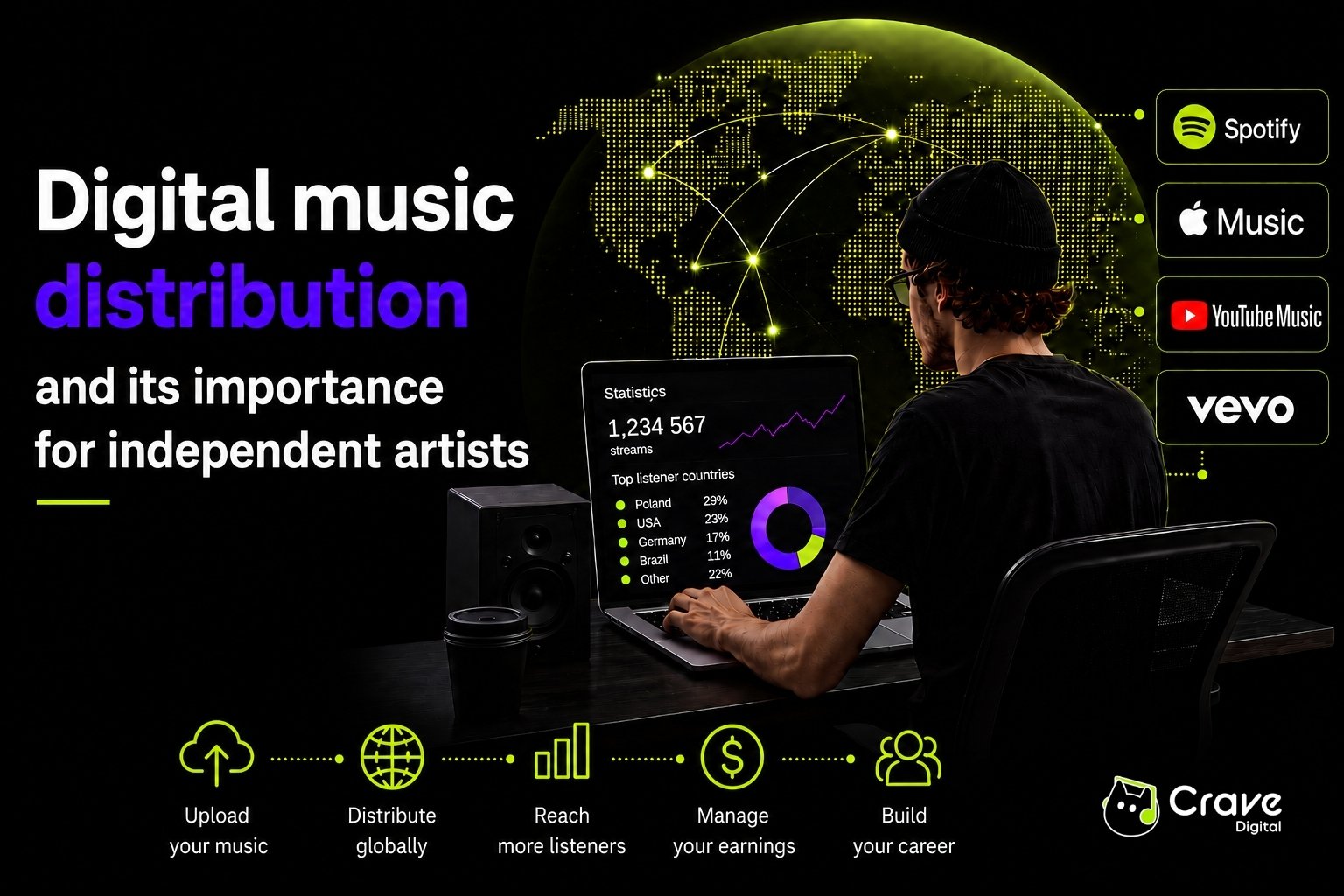
Just over a decade ago, artists without the backing of a major label could mostly count on local gigs and the hope that someone "from the industry" would notice them. Today - thanks to platforms like Spotify, Apple Music, YouTube Music and VEVO - every creator has a chance to reach a global audience, promote their music on their own terms and manage their revenue independently.
Digital distribution isn't just convenience - it's a tool of real independence. It's exactly what allowed artists like Chance the Rapper, Billie Eilish and Gus Dapperton to achieve international success without the support of major labels. Using the available tools, social media and a well-thought-out strategy, they showed that the road to the top doesn't have to run through the classic channels of the music industry.
In this article we'll look at the specific tools streaming platforms offer independent artists, how to squeeze the most out of digital distribution, and what to do so you don't get lost in the crowd of new releases. We'll start with what distribution actually is - if you want to dig into the topic, see our guide: What is music distribution?
The Most Popular Streaming Platforms - What They Offer Independent Artists
The last few years have been a genuine revolution in the digital distribution of music and video. Streaming services have become not only the main channel for listening to music, but also an extremely important tool for creators who want to develop their careers independently of major labels. Spotify, Deezer, Tidal, Amazon Music, Apple Music, YouTube Music - each of these platforms offers more than just a "place" for your music. It's a complete environment that lets you publish tracks, reach listeners and earn - all under the artist's control.
Before we get into the details, here's an overview of the most important tools for artists - it will help you quickly judge what's worth focusing on first:
Spotify - the global streaming leader. Take Spotify, for example. With Spotify for Artists, creators can not only manage their profile (update photos, bio, or add their own playlists) but also analyze detailed listening data. Where is your music played most often? Which track gets the biggest reach? This kind of data helps you plan promotions, releases and... tours. Yes, fan geolocation really matters!
The most powerful promotional tool is still editorial playlists - like "New Music Friday" or the personalized "Discover Weekly." Landing on a list like that can mean millions of plays. Every artist can submit a new track for consideration (ideally 3–4 weeks before release) - and it's worth doing consistently.
For more advanced creators, Spotify also offers Discovery Mode. It's not advertising but a priority signal that artists and labels add to selected tracks, increasing their chance of appearing in personalized recommendations - radio and Autoplay. It works with no upfront fee, but it has a cost: instead of a payment, a 30% commission is taken from the royalties on plays in Discovery Mode contexts, while all other plays remain commission-free. The feature is in beta and available to eligible artist teams - generally from around 25,000 monthly listeners, via supporting distributors. It's best treated as one tool within a strategy rather than the main growth lever.

Here's what it looks like in practice - a short Spotify clip showing the tools available in the artist dashboard:
Apple Music for Artists - a digital command center for creators
Apple Music isn't just a streaming platform - it's also a tool that gives artists control over their online musical presence. With Apple Music for Artists, creators get access to advanced statistics and analytics that help them better understand their audience and make smarter promotional decisions.
One of the platform's more interesting features is the ability to track in real time where and how often their tracks are played on radio around the world. This is possible thanks to a partnership with Mediabase, and that knowledge is hugely valuable when planning tours or collaborations with local media.
Apple Music for Artists also delivers clear data on which tracks are played most often and what listeners prefer. On top of that come demographic details - age, gender, location - which help tailor your messaging to specific fan groups. Creators can also edit profiles and monitor their tracks' presence on playlists.
Deezer and Tidal - sound quality and real support for creators
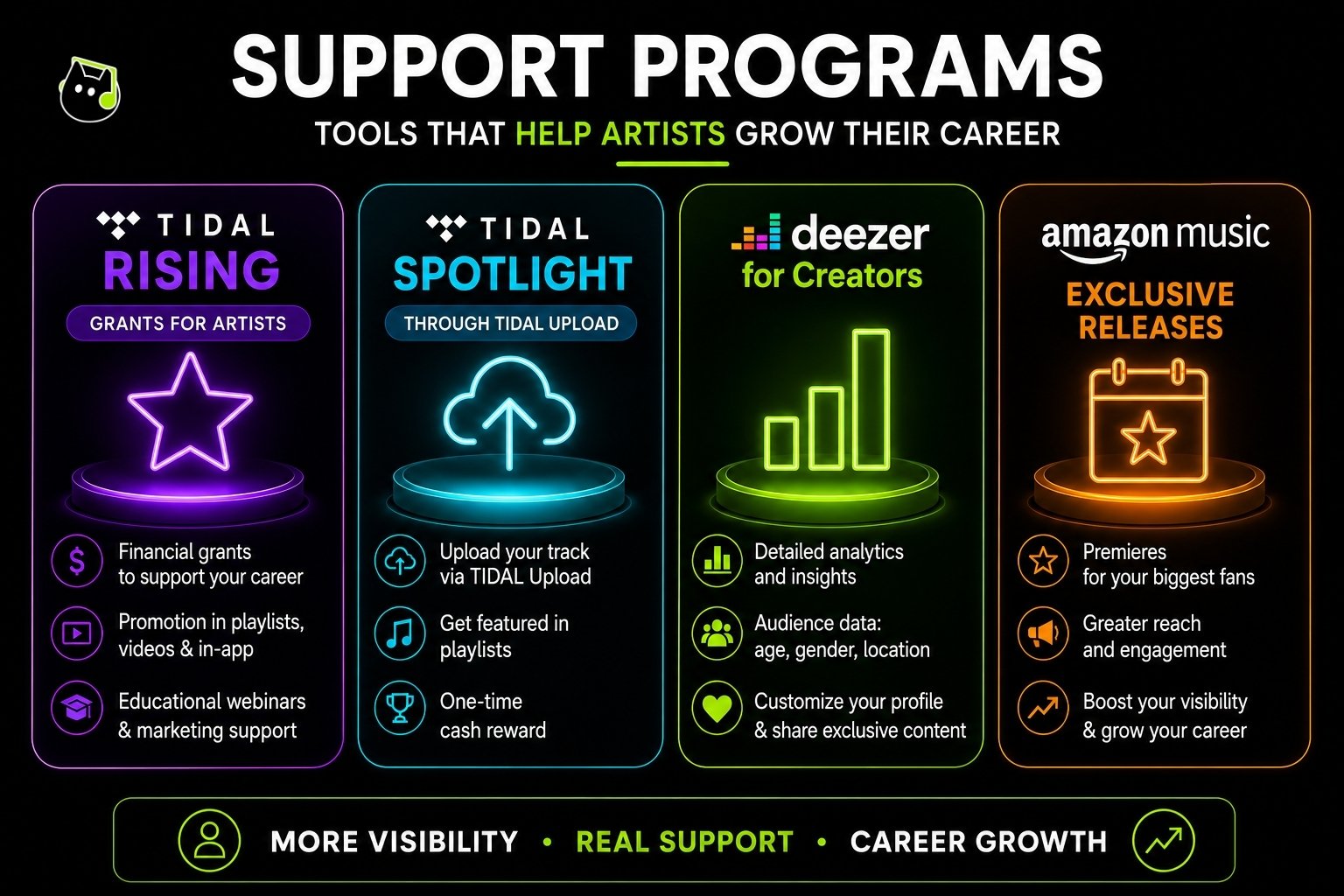
Deezer and Tidal are not only platforms known for high-quality sound, but also services that genuinely invest in the development of independent artists. They offer a set of tools and programs that help build a career, reach new audiences and establish closer contact with fans.
Deezer for Creators is an analytics panel built with creators in mind. It lets you track the number of plays, check where listeners come from, their gender and age. Artists can also personalize their profiles and add exclusive content that makes fans feel closer to their favorite performer.
Tidal, in turn, has long focused on supporting young talent. Its flagship TIDAL RISING program promotes independent artists through dedicated playlists, video material and in-app recommendations. The program also offers direct funding for selected artists - with full freedom in how the funds are used, e.g. recording an album or a music video - plus educational webinars and marketing support. Separately there's Spotlight, a feature tied to TIDAL Upload, which lets artists upload tracks themselves. Once a track is chosen by Tidal's editorial team, the artist gains playlist visibility and a one-time reward; in 2026, Spotlight was expanded to Canada, the UK and part of Europe.
Amazon Music - music in a giant's ecosystem
Amazon Music is more than just another streaming platform - it's part of Amazon's huge ecosystem. For independent artists, that's a chance to reach a wide audience, especially since the service is integrated with Amazon Prime, Alexa and Echo devices. Which means your music can be discovered... even through the voice command "Alexa, play something new."
One of Amazon Music's biggest advantages is the ability to organize exclusive releases - tracks that appear only here or earlier than on other platforms. The platform also offers the Amazon Music for Artists tool, which lets you track plays and analyze fan demographics. A bonus? Integration with Amazon Merch - if you sell physical products alongside your music, you can bring it all together in one place.
YouTube Music - streaming and video in one ecosystem
YouTube Music is today one of the world's largest channels for discovering music, and its strength is the connection to the YouTube ecosystem. A single upload - handled by a distributor - reaches both the music app and the world's biggest video platform, where people actively search for new sounds.
For the artist, this means access to YouTube for Artists and YouTube Studio - unified analytics for music and video: data on viewer demographics and geolocation, traffic sources, and which tracks resonate most. Two things are worth using deliberately: Shorts - short videos that can accelerate the reach of a single fragment of a track - and Content ID, a system that automatically detects uses of your music in other people's videos and collects royalties from them.
Genius - tell the story of your music
Genius is not just a lyrics database - it's a platform that lets creators share the context and the story behind their music. It's exactly where Spotify and Apple Music pull some of the information shown while tracks play. It's worth verifying your artist profile on genius.com so you have control over what fans read about your tracks.
VEVO - where image meets sound
Vevo is a global player that has long helped artists build their image through top-quality music videos. Thanks to its partnership with YouTube and presence across many markets (and on Smart TV screens), clips published via Vevo have enormous reach, and a transparent ad revenue-sharing model lets you earn from them.
One important note: VEVO is not a platform an artist sets up on their own. Access runs through a distributor or label and works mainly within the YouTube ecosystem. We write more about how to embed video in promotional materials in our guide How to create a professional EPK. If you're planning to release a music video, the simplest way is through digital distribution.
The common denominator: independence and control
All the platforms described share one thing - they give artists freedom. The ability to publish music independently, build your own image and stay in direct contact with fans is the foundation of an independent career today. The available analytics tools let you make decisions based on real data rather than gut feeling.
How Streaming Services Enable Publishing, Promotion and Earning Without Traditional Labels
In the digital era, music streaming services and distribution platforms have completely changed the rules of the game. Today, independent artists can publish, promote and earn from their music without the involvement of traditional labels - thanks to services like Spotify, Apple Music and Tidal, or platforms like Crave Digital.
Music Publishing
Easy, fast upload. Self-publishing platforms like Crave Digital make it easy to publish music across all major services. After buying an annual subscription, an artist can send tracks to Spotify, Apple Music, Tidal and Amazon Music, among others. Importantly, artists working with Crave Digital keep 100% of their earnings and full rights to their music.
Full control over the release. Creators manage every element of a release themselves - release date, pre-orders, platform selection - which makes it possible to plan a campaign precisely.
Promotion
Access to a global audience. Algorithmic recommendation systems, curated playlists and creator tools mean that even a beginner performer has a chance to reach a wide audience. One good playlist placement can trigger an avalanche of reach.
The power of social media and short video. Posts on Instagram, TikTok or X aren't just release announcements - they're an opportunity to build a community. Short video plays a special role today (TikTok, Instagram Reels, YouTube Shorts) - a single viral fragment of a track can translate into an avalanche of streams.
Monetizing Music
Pay-per-play model. Rates for a single stream may seem symbolic, but for popular tracks and a steadily built catalogue the amounts add up. Using platforms like Crave Digital, artists keep 100% of earnings — with no commissions or middlemen.
Merch and direct sales. Spotify (in partnership with Merchbar) and Bandcamp let you sell physical products - vinyl, CDs, t-shirts, posters. An extra source of income and a way to build a stronger bond with fans.
Concert promotion and ticket sales. Thanks to integration with Bandsintown for Artists, artists promote concerts directly on their Spotify profiles. Bandsintown took over this role from Songkick, whose long-running partnership with Spotify came to an end. Every fan visiting the profile sees upcoming events in the "Concerts" section. Spotify also displays listings from Ticketmaster, Eventbrite and AXS.
Case Study: Successes of Independent Artists
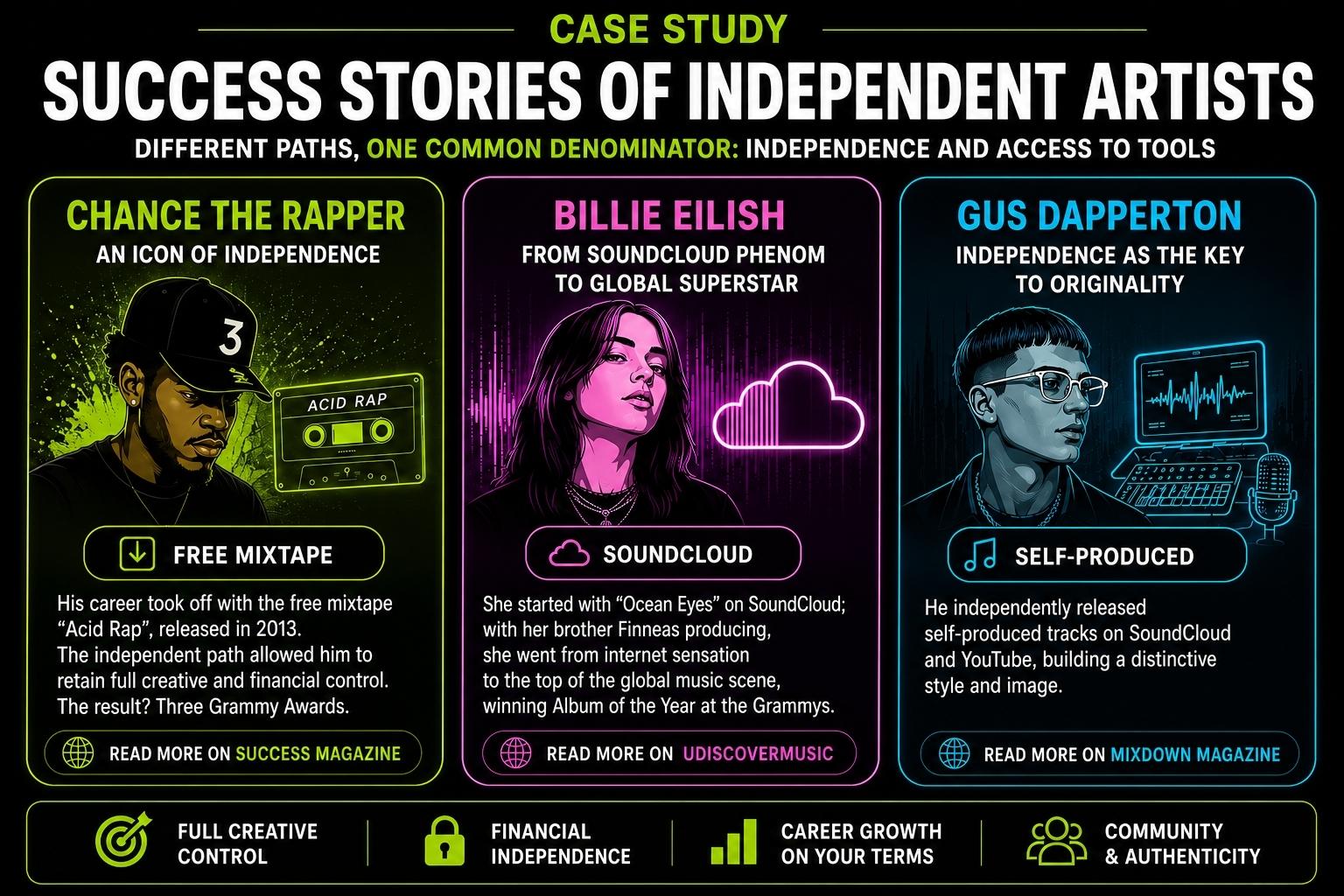
Different paths, one common denominator: independence and access to tools
The stories of these three show there's no single road to success. What unites them is the ability to use the available platforms and tools to create, promote and share music on their own terms.
Streaming Services and Artistic Independence - Summary
Modern streaming services have become the foundation of a new career model - one built on independence, accessibility and full control. Creators can publish tracks themselves, build a brand, engage fans and earn. In this context, tools like Crave Digital provide real support: easy publishing across all the most important services, advanced analytics and promotional help - without taking control away from the creator.
If you're just getting started, check out our guide How to acquire rights to a song and our ad campaign manager.