
What is an EPK and why it decides whether you get the gig
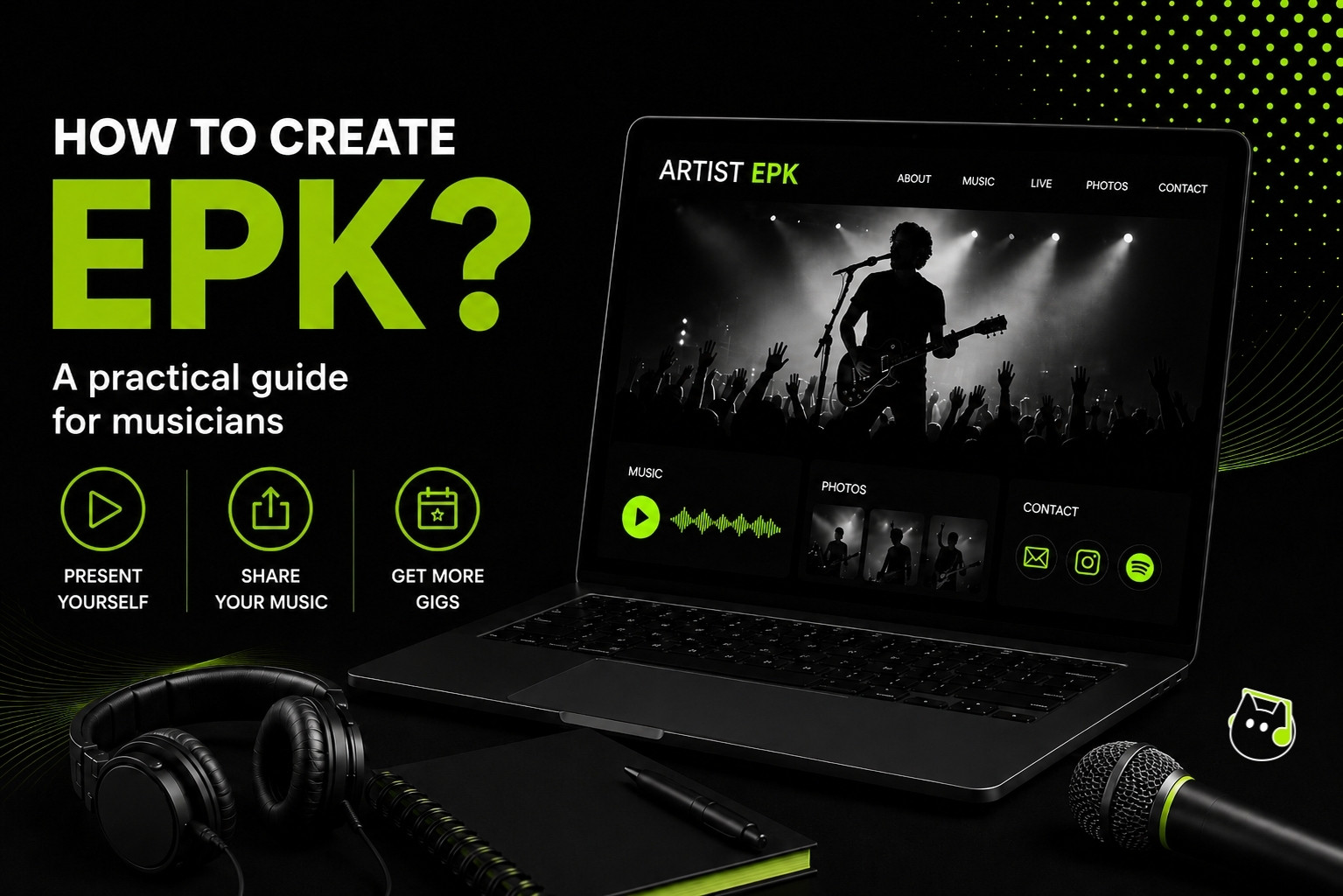
An Electronic Press Kit (EPK) is an artist's digital business card - one link where a promoter, manager, booker or journalist can check in seconds who you are and whether you're worth booking. It's not a folder with everything you've ever made. It's a set of your strongest materials, arranged to convince someone who scrolls through dozens of similar submissions every day.
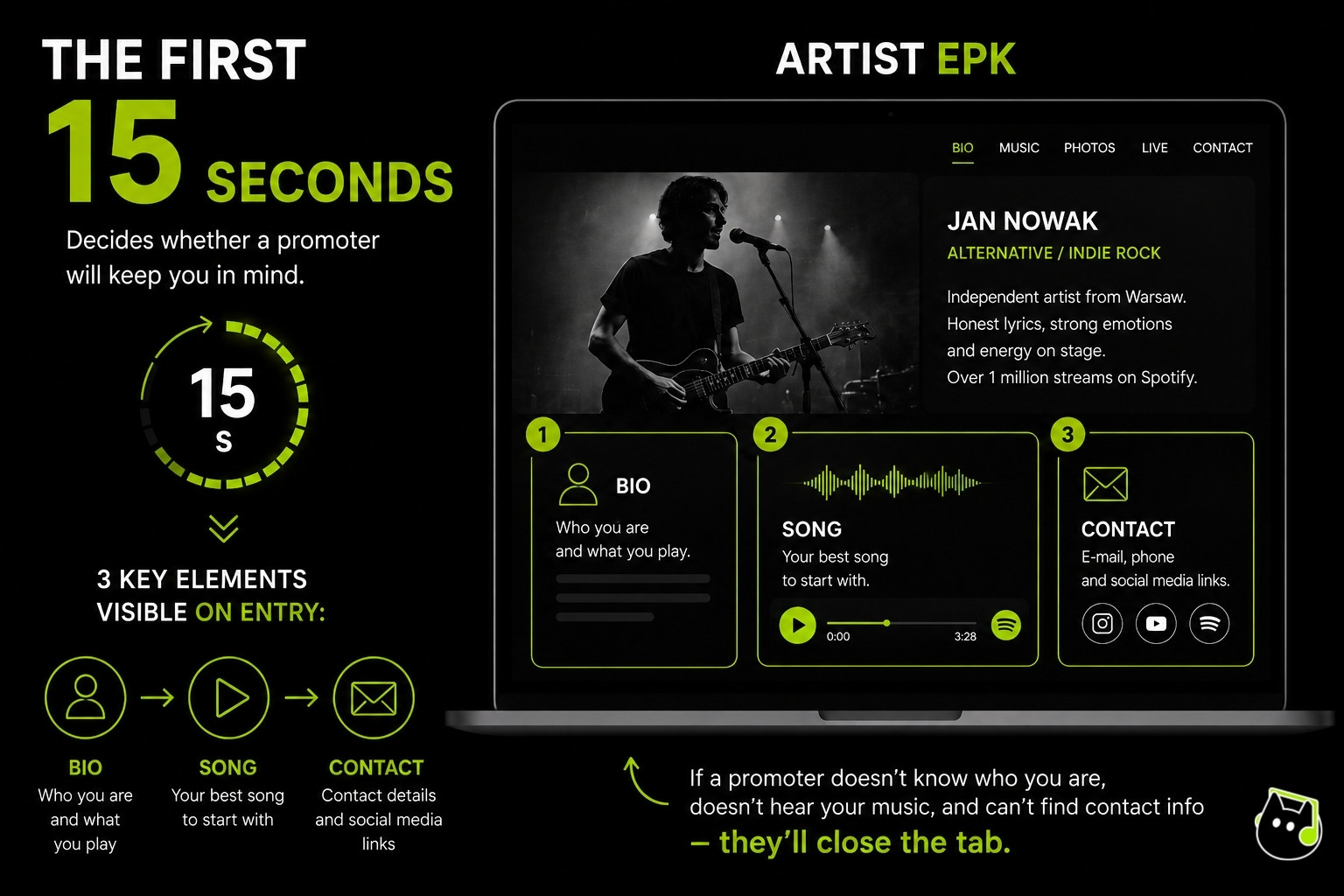
And that's the crux: a good EPK wins in the first 15 seconds. A promoter doesn't read - they scan. If they don't see who you are, hear a track and find your contact right away, they close the tab.
Everything else in this guide serves one purpose: to make those 15 seconds work in your favour.
What should a musician's EPK contain?
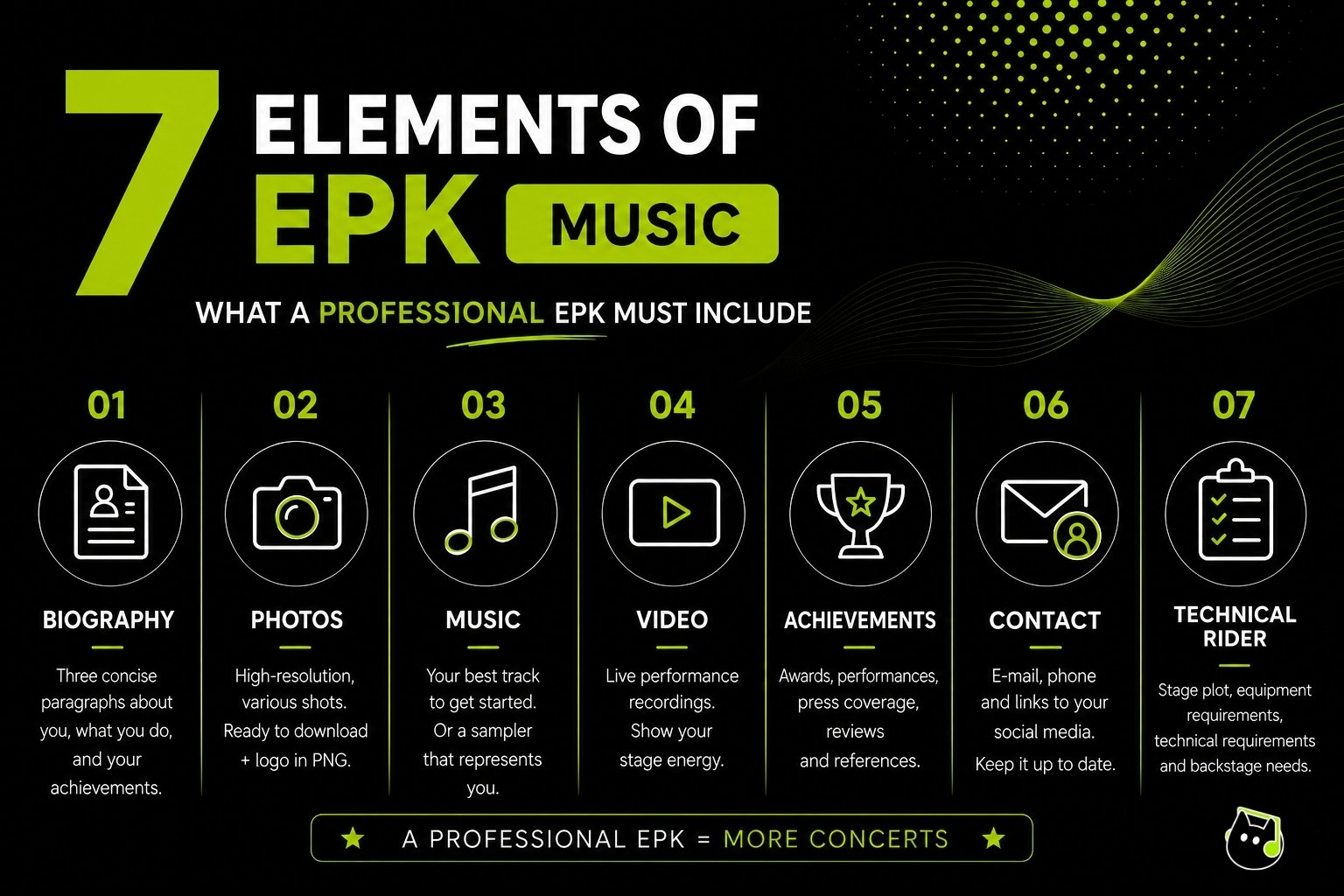
1. Biography - in three lengths
Your bio is the first thing they read. Prepare three versions and use them depending on the situation:
- Short (40–80 words) - for the EPK and quick emails. Who you are, what you play, one strong fact (a support slot, a festival, a streaming milestone).
- Medium (around 150 words) - for gig announcements or press notes.
- Long (around 300 words) - the full story for your website.
Put your strongest press quote or recommendation right at the top - it builds credibility before anyone gets to the rest. Mind your language; if you're not confident in your writing, have the text proofread.
2. Photos - high resolution, ready to download
Prepare at least three high-resolution press photos: a portrait, a band shot and a live shot. Provide both landscape and portrait versions - journalists need both for different formats.
The thing that's most often overlooked: photos have to be easy to download. If downloading requires right-clicking and choosing "save as", you're making life harder for the person who's supposed to write about you. Provide direct download links or a ZIP file.
It's also worth including a logo in PNG format with a transparent background - it often ends up on posters, event graphics and promotional materials.
3. Music and video - your best track first
Choose a few tracks that best capture your current direction, and put the strongest one first. The rest can show your stylistic range.
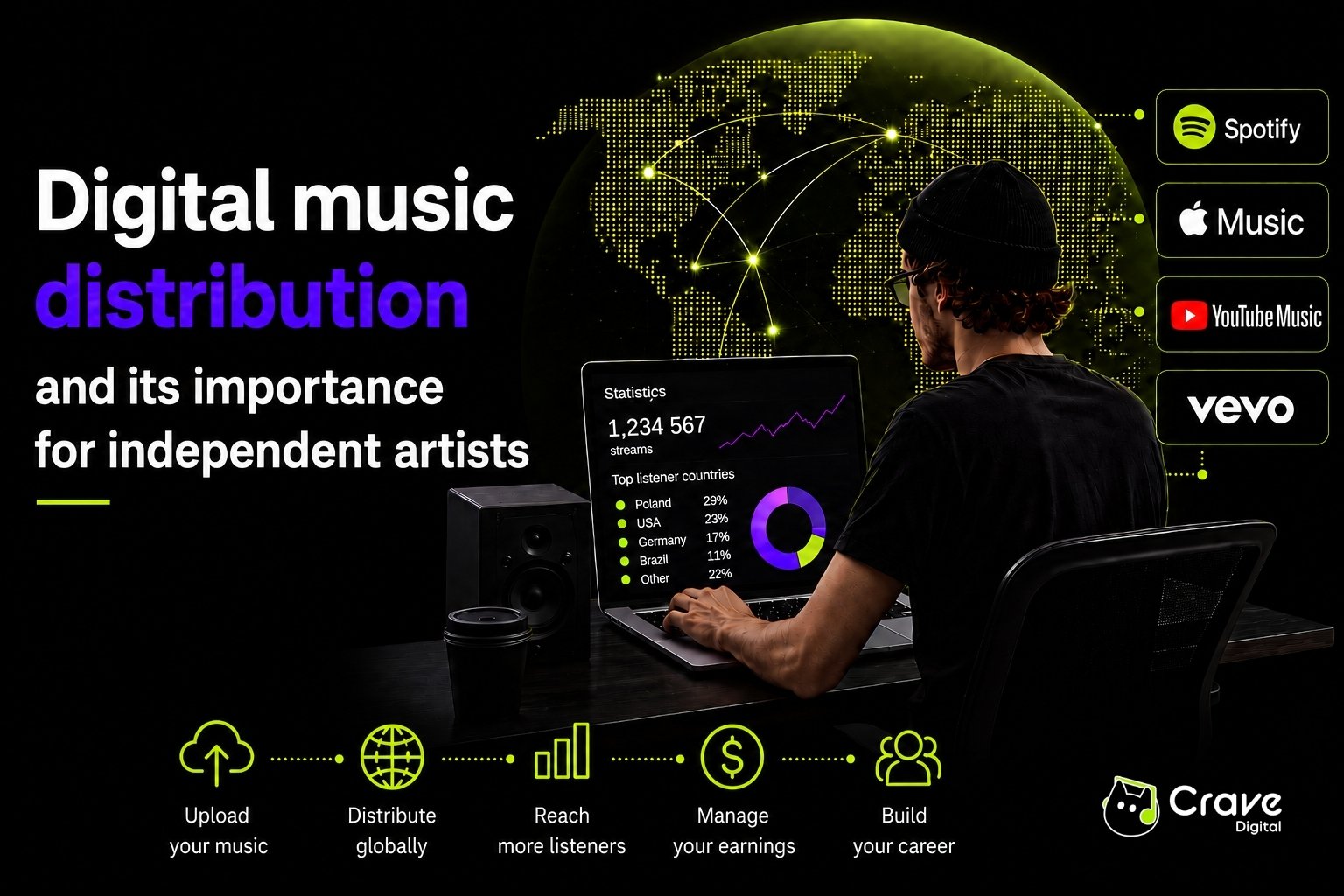
It's best to embed a player that's visible the moment someone lands on the page (Spotify, Apple Music or YouTube), so the promoter doesn't have to hunt for links to your music. If you're only just planning to launch on streaming, start with global digital distribution.
When it comes to video, promoters value live performance recordings most - it's easier to judge stage presence and audience connection from those than from a scripted music video. Footage shot on a phone is acceptable only when the image and sound quality stay at a high level.
4. Achievements, reviews and references
List what you can genuinely point to: awards, important shows, collaborations, media coverage or editorial playlists. Always provide review quotes with a link to the source - without it they're far less credible.
Do you play private events or corporate gigs? Include recommendations from previous clients. For an event organiser, that's often one of the strongest arguments.
5. Tour calendar
An up-to-date calendar shows that you're active. List all your events - from festivals to small clubs - along with dates, locations and event links. Even if you mostly play locally, consistency builds trust.
Remove past dates. An empty or outdated calendar works worse than none at all.
6. Contact and social media
Your phone number, email address and links to social profiles should be visible right away and accessible in a single click. Point to one contact person - yourself, your manager or your agent - to avoid communication chaos.
Promoters assess social media not by follower count, but by community engagement. Bought likes and artificially inflated stats are very easy to spot.
7. Technical rider (optional)
If you play regularly, include a technical rider containing:
- the stage plot,
- an equipment list,
- sound requirements,
- lighting requirements,
- backstage information.
It signals professionalism and means fewer surprises on the day of the event.
Can Linktree replace an EPK?
Short answer: no - but the two tools complement each other perfectly.
Linktree gathers links. An EPK presents the artist. A promoter who only receives a Linktree link sees a list of links with no context - they don't know who you are, what you've achieved or why they should book you.
The best approach is to use Linktree as a traffic splitter, and dedicate one of the buttons to your professional EPK.
How to create an EPK - where to build it?
Most artists don't need a separate EPK platform if they already have their own website.
Dedicated tools for musicians
Popular options include Bandzoogle and EPK Builder - they offer ready-made templates, photo galleries, tour calendars and easy sharing of materials. If you're aiming for sync and licensing (music for film or advertising), it's worth checking out DropCue, which additionally shows who actually listened to your material. Always check the current pricing directly with the service provider.
Your own website
WordPress, Webflow or Squarespace give you full control over your look and personal brand. It's the most professional option, though it takes more work.
A PDF made in Canva or Adobe Illustrator still works well as a quick file sent by email. It's a good option to start with.
Whichever form you choose, your EPK should be:
- easy to navigate,
- visually consistent,
- available under a single link,
- simple to update.
It's worth using short links or smart links. That makes it easier to share your EPK in a message, bio or promotional materials. If you promote your releases with ads, well-prepared links and materials will also make working with an advertising campaign manager easier.
Layout - design for scanning
A promoter doesn't read the page from top to bottom. They scan it. So make sure you have:
Hierarchy and readability
Clear headings, appropriate spacing and minimalism make the most important information easy to find.
Brand consistency
Use the same colours, fonts and visual style that appear in your other promotional materials.
Typography
Go for a legible typeface and a clear hierarchy between headings, subheadings and body text.
Responsiveness
Most people open an EPK on their phone these days. Test that everything works properly on mobile devices.
Update after every release
An outdated EPK is worse than none at all - it signals to the industry that you're not keeping up with your own career. Update:
- new singles,
- new music videos,
- reviews,
- achievements,
- your tour calendar,
- contact details.
If nothing has happened for a while, review the whole thing at least once every month or two.
The most common mistakes
- Overloading with content - an EPK isn't an autobiography; keep only your strongest materials.
- Outdated materials - old photos and expired dates signal stagnation.
- Lack of visual consistency - random fonts and photos look amateurish.
- Low quality - poor resolution and an amateur demo are an instant turn-off.
- Hidden contact - if your email is hard to find, you lose the opportunity.
- Neglected social media and fake stats - promoters spot them immediately
FAQ - the most common questions about EPKs
How much does it cost to create an EPK?
From nothing (a PDF made in Canva) to a few hundred euros for a professional website or a subscription to a dedicated tool.
Does an EPK need its own website?
No. You can use a dedicated builder, a PDF or another platform. Your own website, however, gives you the most control over your look and brand.
How often should I update my EPK?
After every release, music video or important event. If nothing is happening, it's worth reviewing the whole thing once every month or two.
Does a beginner artist need an EPK?
Yes. Even a simple EPK looks more professional than sending individual links, and it shows that you take your career seriously.
Summary
An EPK is one of the most important promotional tools any artist has - one link that has just a dozen or so seconds to convince a promoter, organiser or journalist. Focus on quality over quantity, lead with your best track, keep your materials current and make it easy to get in touch.
Already have your EPK ready? Make sure that, after clicking, the promoter can also find your music on Spotify, Apple Music or Tidal. If you're only just releasing your tracks, check out digital distribution at Crave Digital and prepare your release from start to finish in one place.